Patronage and Cultural Flourishing
Every flourishing of Indian culture has rested on patronage — a reflection on what fills the void now.
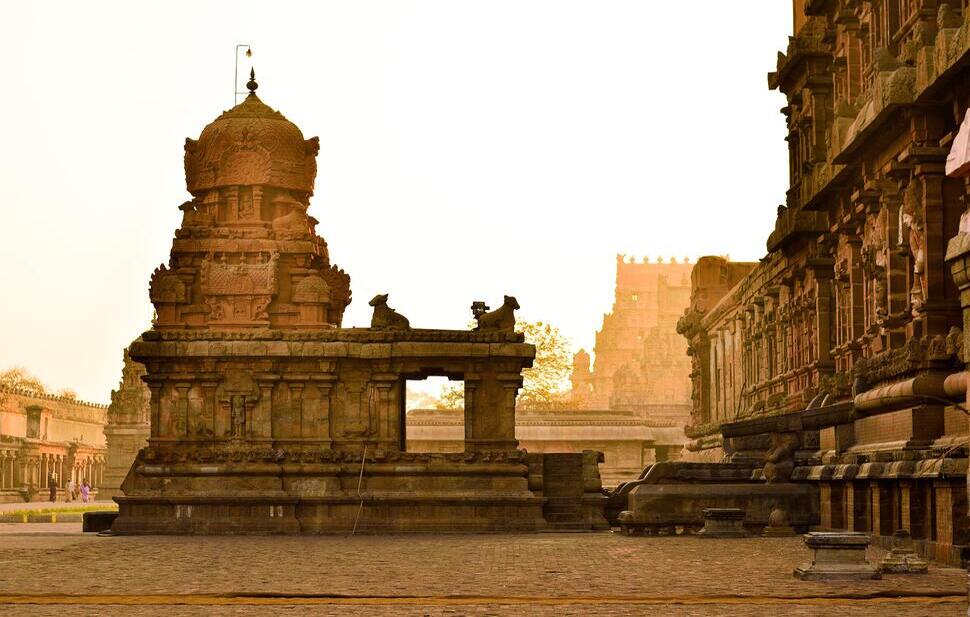
Every cultural tradition requires financial resources to survive and thrive. What we call Indian, or Hindu, civilization is a product of a long history of patronage provided by either kings or wealthy merchants. Great scholars and artists are not made when livelihood is a constant source of worry.
We can read a Kalidasa because the Gupta kings patronised him, and there is a Tulsidas because the merchant groups of North India sponsored him. During the medieval ages, it was the rich merchants who converted their houses into schools so that students could continue to learn and scholarship could continue to thrive. After the Mughals were gone, it was Rani Ahilyabai Holkar who sponsored the reconstruction of all our destroyed Shiva temples, including the ones at Somanath and Banaras.
Even in modern times, it was Rani Rashmoni who supported and sponsored Ramakrishna Paramahansa and his small group of disciples. One of them was called Swami Vivekananda. Vivekananda’s trip to America was sponsored by the Maharaja of Khetri, and the rest, as they say, is history. Even the modern yoga tradition that we all practise today has been made possible because the Maharaja of Mysore sponsored and opened his personal library to Krishnamacharya, whose students turned out to be B. K. S. Iyengar and Pattabhi Jois. It was the Birlas who sponsored Gandhi and Tagore. It was S. N. Goenka who sponsored a Burmese monk to teach and spread a technique of meditation which we call Vipassana. These examples can be multiplied endlessly.
The point is that any culture or civilization, if it wants to thrive and survive, must support the people who are the torchbearers of that civilization. In the Hindu tradition, they are Sanskrit scholars, Vedic acharyas, trained pandits, classical musicians, classical dancers, folk singers, yoga acharyas, temple architects, traditional painters, storytellers (katha-vachaks), art conservationists, and many others.
All of the above requires money and sponsorship, because these vocations are not, by themselves, sustainable. Earlier, they were sponsored by kings, merchants, or large temples, and this sponsorship was considered the most auspicious. There is a vast unpublished Sanskrit literature on daan and on why it is considered to be the highest punya. The idea is that the money donated to preserve and protect our traditions would, in turn, preserve and protect our own sense of well-being, because belonging to a culture as rich as ours provides a sense of identity, a sense of stability, and a sense of being part of our own ancestral land and community.
However, today we have no kings to support our religious-cultural traditions, and all our large temples are under government control (and no one knows where the money goes). Further, given the pace at which technology is increasing our exposure to the West, our taste, food, language, and culture are undergoing a massive transformation. Our ancestral traditions, rituals, worship, crafts, art, and music are giving way to the wholesale adoption of consumer culture exported from the West. In an ideal world, a balance would be found between the two, but there is no level playing field. One is backed by vast global capital, while the other is dependent on faith and patronage. This problem is compounded by the fact that our educational system is very antithetical to our own tradition.
There is no easy solution to this deep structural problem. One easy way out is to do nothing and let market forces determine the fate of our ancestral traditions. However, to leave our traditions to the vagaries of capitalism and the latest fads of the age seems a deeply dissatisfying path to take. We have often wondered how to formalize the idea of donating to religious-cultural causes, and how to channel such resources in a way that will preserve and promote our ancestral traditions. Tattva Heritage Foundation is an attempt to work in this direction.